
Virtual Tour Real Estate: Video Tours or Interactive 360?
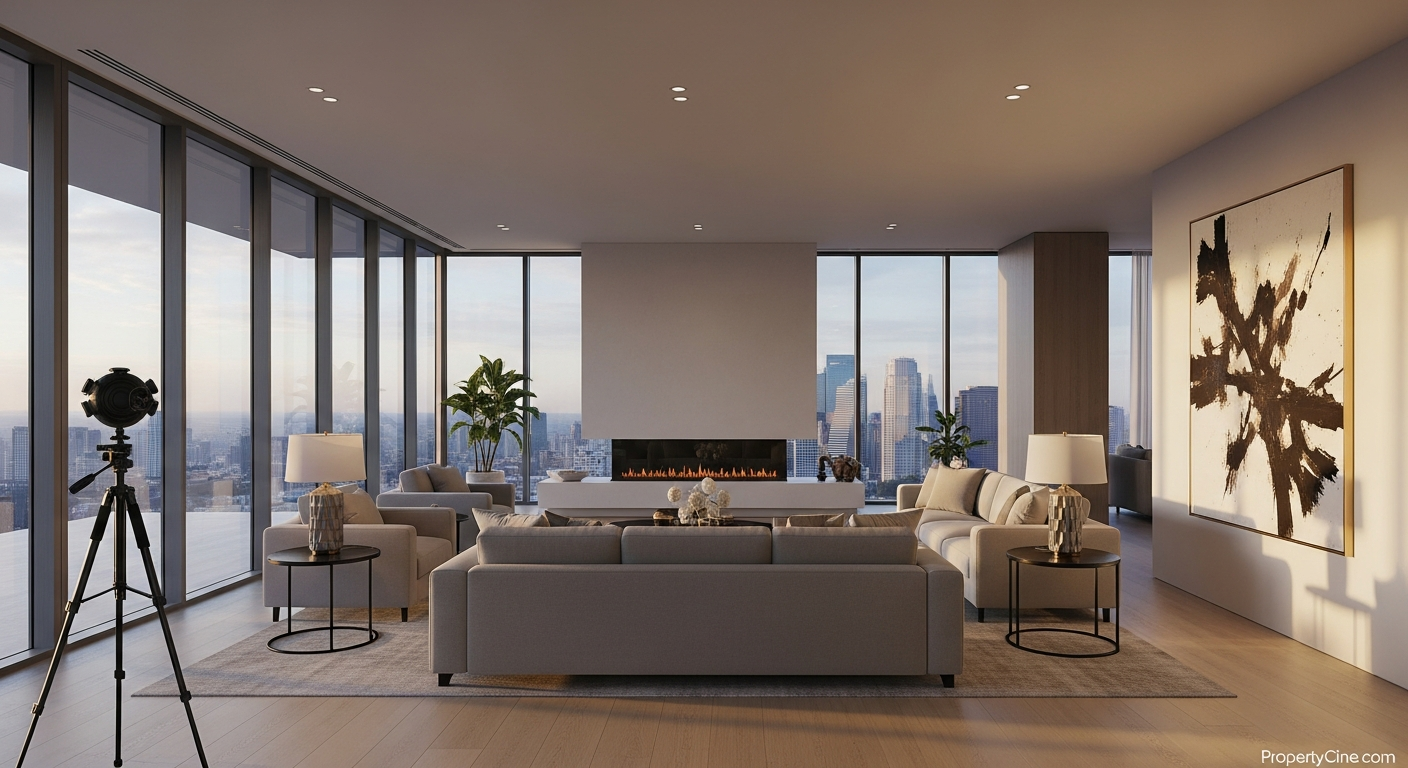
Virtual Tour Real Estate: Navigating the Choice Between Video and Interactive 360 Tours
Imagine a potential buyer scrolling through dozens of listings, trying to get a genuine feel for a property from static images alone. It's a frustrating, often fruitless exercise that can cost you valuable leads and extend time on market. The modern real estate landscape demands immersive experiences, and for many agents, the phrase “virtual tour real estate” immediately comes to mind. But what does that truly encompass? Are all virtual tours created equal? And more importantly, which type — the interactive 360 tour or the cinematic video tour — will deliver the best return on investment for your listings?
The confusion between these two powerful tools is widespread. Many agents use the terms interchangeably, not realizing the significant differences in their impact, production, and most importantly, their ability to convert interest into offers. As a Google SEO expert with over 15 years in real estate content strategy, I can tell you that understanding this distinction isn't just about marketing jargon; it's about fundamentally changing how buyers perceive your properties and, ultimately, your brand.
In this comprehensive guide, we'll dissect the nuances of both virtual and video tours, providing the data, real-world examples, and expert insights you need to make an informed decision. We'll explore which approach excels in engagement, emotional connection, and SEO, helping you secure more inquiries and faster sales in a competitive market where every advantage counts.
What Exactly is a Virtual Tour in Real Estate?
When most people refer to a “virtual tour real estate” experience, they're often thinking of a 360-degree interactive tour. These tours stitch together a series of panoramic still images, allowing viewers to click, drag, and navigate through a property at their own pace. Think of it as Google Street View, but indoors, within a specific property. Users can typically move from room to room, zoom in on details, and sometimes even toggle between floor plans.
The Mechanics of Interactive 360 Virtual Tours
Interactive virtual tours are typically created using specialized 360-degree cameras or by stitching together multiple wide-angle photographs. Software then processes these images into a navigable sequence, embedding hotspots that allow users to transition between different vantage points. Some advanced platforms integrate floor plans, dollhouse views, and even measurement tools, offering a high degree of user control.
Pros of Interactive 360 Virtual Tours:
* User Control: Buyers dictate their viewing path, focusing on areas of interest.
* Detailed Exploration: High-resolution images allow for close inspection of finishes and features.
* 24/7 Open House: Provides constant access to explore the property at any time.
* Reduced Unqualified Showings: Filters out buyers who can immediately see if the layout or features don't meet their needs.
Cons of Interactive 360 Virtual Tours:
* Passive Experience: Can feel static; lacks a guided narrative or emotional flow.
* Technical Glitches: Some users might experience slow loading times or navigation issues.
* Requires User Effort: Viewers must actively click and drag, which some find less engaging.
* Limited Storytelling: Harder to convey the lifestyle or unique ambiance of a home through static panoramas.
Unpacking the Power of Real Estate Video Tours
In contrast to the interactive 360 virtual tour, a real estate video tour is a linear, guided experience. It's akin to watching a mini-movie about the property, typically featuring smooth camera movements, professional editing, background music, and sometimes even narration or on-screen text. These cinematic tours tell a story, guiding the viewer through the home's best features and capturing its unique atmosphere.
The Art and Science of Cinematic Real Estate Videos
Creating compelling real estate video tours involves careful planning, professional videography (or advanced AI tools), and expert editing. The goal is to create an emotional connection, showcasing not just the space, but the feeling of living there. This often includes dynamic shots of amenities, drone footage for exterior and neighborhood context, and subtle artistic touches that highlight architectural details.
Pros of Real Estate Video Tours:
* Emotional Connection: Storytelling and cinematic elements evoke feelings, helping buyers envision themselves in the home.
* Higher Engagement: Videos are inherently more engaging, requiring less user effort and holding attention longer. According to a 2023 Google study, listings with video receive 403% more inquiries than those without, demonstrating a significant boost in engagement.
* Stronger Brand Building: High-quality videos reflect positively on the agent's professionalism and marketing prowess.
* Exceptional for Social Media: Videos are highly shareable and perform extremely well on platforms like Instagram, Facebook, and YouTube, expanding reach exponentially. NAR's 2024 data indicates that 51% of home buyers found their home online, and video plays a crucial role in initial discovery.
* SEO Advantage: Google prioritizes video content. Listings featuring video tours are significantly more likely to rank higher in search results and capture featured snippets, especially for broad queries like "virtual tour real estate."
Cons of Real Estate Video Tours:
* Higher Production Cost: Traditionally, professional video production is more expensive and time-consuming than 360 photography.
* Less User Control: Viewers follow a predetermined path, unable to linger on specific details as long as they might wish.
* Fixed Perspective: The video shows what the creator wants to highlight, potentially missing a buyer's specific points of interest.
* Quality is Critical: Poorly produced videos can actually detract from a property's appeal.
Virtual Tour Real Estate: A Head-to-Head Comparison
Let's break down the key differences between these two powerful tools to help you decide which is the optimal choice for your marketing strategy.
| Feature/Aspect | Interactive 360 Virtual Tour | Cinematic Real Estate Video Tour |
|---|---|---|
| User Experience | Click-through, interactive, self-guided, detail-focused | Linear, guided, immersive, emotionally driven, narrative |
| Emotional Impact | Low to moderate; informative, functional | High; designed to evoke feeling and lifestyle |
| Storytelling | Limited; focuses on static presentation of space | High; conveys atmosphere, flow, and potential lifestyle |
| Production | 360 camera or stitched photos; specialized software | Professional videography (or AI), editing, music, potentially narration |
| Cost | Moderate; often requires specific equipment and software | Traditionally higher (professional videographers), but AI platforms are reducing this significantly |
| Engagement Metrics | Time on page, clicks per hotspot | View count, watch time, shares, comments, click-through rate |
| SEO Value | Good for long-tail queries; can improve time on site | Excellent; Google favors video, higher click-through rates, better for featured snippets |
| Mobile Friendliness | Good, but can be clunky with finger dragging on smaller screens | Excellent; designed for smooth playback on all devices |
| Conversion Potential | Qualifies leads by allowing self-screening | Generates more inquiries, builds stronger initial interest |
Why Video Tours Often Outperform for Real Estate Agents
While interactive 360 virtual tours certainly have their place, particularly for detailed spatial understanding, cinematic real estate video tours consistently demonstrate superior performance in attracting and converting buyers. Here's why:
1. The Power of Storytelling and Emotion
People don't just buy houses; they buy homes – and the lifestyle that comes with them. A video tour excels at telling that story. It can highlight the sun-drenched breakfast nook, the cozy fireplace, the vibrant neighborhood park just a stroll away. "A well-produced real estate video isn't just showing a house; it's selling a dream," says Katie Lance, a renowned social media expert in real estate. "It taps into emotions that static images or even interactive tours simply can't reach." This emotional resonance is critical in real estate, driving deeper interest and a stronger desire to visit in person.
2. Superior Engagement and Time On Page
Statistics consistently show that video content captures and retains attention far more effectively. According to a recent study by Wyzowl (2024), 88% of people have been convinced to buy a product or service by watching a brand's video. While real estate is different, the principle holds: engaging video makes people want to learn more. Properties with a video tour see, on average, a 49% increase in qualified leads compared to those without, according to Inman Group analysis. This means more serious buyers contacting you, not just casual browsers.
3. Unmatched SEO Benefits and Discoverability
Google loves video. Websites featuring video content are 53 times more likely to rank on the first page of Google, according to Insivia. When someone searches for a "virtual tour real estate" or specific property types, a listing with a well-optimized video tour has a distinct advantage. Google's algorithms prioritize rich media that keeps users engaged, and video delivers this in spades. Moreover, video content significantly increases the likelihood of appearing in rich snippets and video carousels on the search results page, boosting visibility dramatically.
4. Accessibility and Ease of Consumption
Video tours are incredibly easy for consumers to watch on any device, from a smartphone to a smart TV. They require no special clicking or dragging, making them a passive yet deeply immersive experience. This frictionless consumption lowers the barrier to entry for busy buyers, allowing them to quickly grasp the essence of a property in minutes, anywhere, anytime. A 2023 study by the National Association of REALTORS® (NAR) revealed that 73% of homeowners prefer to work with agents who use video marketing, indicating a strong preference among sellers as well.
Real-World Impact: Virtual Tour Real Estate Success Stories
Let's look at some tangible examples of how integrating advanced real estate marketing, particularly video, has transformed outcomes for agents.
Real-World Example 1: The Luxury Condo Breakthrough in Miami
A luxury agent in Miami, known for her high-end listings, struggled to differentiate a stunning penthouse with traditional photography and a basic 360-degree virtual tour. The property sat on the market for 90 days, drawing minimal serious interest despite its prime location and amenities. She then invested in a cinematic video tour, incorporating drone footage of the building and surrounding beach, a walkthrough highlighting the high-end finishes, and ambient music. The outcome? Within two weeks of launching the video, online listing views surged by 287%, and she received three strong offers, ultimately selling the penthouse at 98% of the asking price. The video tour created an aspirational narrative that static images couldn't capture, turning browsers into eager buyers.
Real-World Example 2: Suburban Family Home in Texas – Reducing Time on Market
A mid-market agent in Austin, Texas, typically saw her listings spend 30-45 days on market. For one particular family home, she decided to augment her standard photos and floor plans with an AI-generated video tour using a platform like PropertyCine. This tool transformed her existing high-quality photos into a smooth, music-backed video walkthrough. The result was remarkable: the home received 75% more online shares and engagement compared to her previous listings, and went under contract in just 14 days, selling for above asking price. The video provided a quick, digestible overview that resonated with busy families searching for homes, drastically shortening the sales cycle.
Real-World Example 3: The Out-of-State Buyer Conversion in Colorado
An agent specializing in mountain resort properties in Aspen, Colorado, faced the challenge of attracting out-of-state buyers who couldn't easily visit for showings. Her standard virtual tour real estate offering (360 interactive) provided good detail but lacked a personal touch. By adding personalized video tours – some pre-recorded cinematic ones and others live video walkthroughs via Zoom – she dramatically increased her conversion rate for remote buyers. One particular buyer, after viewing a cinematic video tour and then a live video tour, made an offer sight-unseen. "The video tour made me feel like I was there, even though I was 2,000 miles away," the buyer remarked. This highlights the powerful role of video in bridging geographical gaps and building trust.
Leveraging AI to Revolutionize Your Real Estate Video Tours
Traditionally, creating high-quality real estate video tours was a significant investment, often requiring professional videographers, expensive equipment, and extensive post-production. This barrier made it challenging for many agents, especially those with multiple listings or tighter budgets, to fully capitalize on the power of video.
This is where AI-powered platforms like PropertyCine come into play. PropertyCine leverages artificial intelligence to transform your existing real estate listing photos into stunning, cinematic video tours. It automates the complex process of camera movement simulation, scene transitions, music synchronization, and even dynamic text overlays, turning a collection of static images into a compelling, professional video in minutes.
The AI Advantage for Your Virtual Tour Real Estate Strategy:
* Cost-Effective: Drastically reduces the need for expensive equipment or professional videographers.
* Time-Saving: Generates high-quality videos in a fraction of the time it would take manually.
Scalability: Allows agents to create cinematic videos for all* their listings, not just the high-end ones.
* Consistency: Ensures a consistent, polished brand aesthetic across all your video marketing efforts.
* Enhanced Reach: Makes it easier to share engaging video content across social media and listing portals, boosting your “virtual tour real estate” presence.
Expert Insight: The Future is Hybrid
"The future of real estate marketing isn't just about choosing one tool; it's about intelligently integrating the best of both worlds, powered by AI," states Ryan Serhant, a leading luxury real estate broker and media personality. "While immersive video drives initial interest and emotional connection, interactive 360 tours can provide the granular detail for qualified buyers. AI tools are making it possible for every agent to execute a sophisticated, multi-faceted strategy without breaking the bank."
Actionable Steps: Creating Winning Real Estate Video Tours
Ready to elevate your “virtual tour real estate” game with compelling video? Here’s a step-by-step guide to get you started, leveraging both traditional best practices and AI solutions:
Step 1: Strategic Planning (1-2 Hours per Listing)
* Define Your Narrative: What's the unique selling proposition of this property? Is it the view, the spacious kitchen, the vibrant neighborhood? Plan how the video will tell this story. List 3-5 key features to highlight.
* Shot List (if filming manually): Create a detailed list of shots needed for each room and exterior area. Consider lighting, angles, and flow. For AI solutions, ensure you have high-quality, well-lit photos covering all key areas.
* Choose Your Soundtrack: Select royalty-free music that matches the property's vibe (e.g., upbeat for a family home, sophisticated for a luxury condo, calming for a rural retreat).
* Prepare the Property: Stage the home professionally. Declutter, clean, and depersonalize. Ensure all lights are on and blinds are open to maximize natural light.
Step 2: Content Creation (1-4 Hours for Manual Filming / 15-30 Mins for AI)
* Manual Filming: Use a high-quality camera (DSLR, mirrorless, or even a modern smartphone with a gimbal). Shoot smooth, slow pans and tracking shots. Get a mix of wide shots, medium shots, and close-ups of key features. Include exterior shots and, if appropriate and licensed, drone footage.
* AI-Powered Video (e.g., PropertyCine): Simply upload your best listing photos (minimum 20-30 high-resolution images are ideal). The AI will analyze the images, understand the property layout, and automatically generate cinematic camera movements, transitions, and effects. PropertyCine can typically produce a professional video in under 15 minutes once photos are uploaded.
Step 3: Editing and Enhancements (2-8 Hours for Manual / 5-15 Mins for AI Review)
* Manual Editing: Use video editing software (Adobe Premiere Pro, DaVinci Resolve, iMovie, CapCut). Assemble clips, synchronize with music, add text overlays for key features, and color grade for a polished look. Aim for a video length of 1-3 minutes for optimal engagement.
* AI Review and Refinement: With AI platforms, the initial edit is done for you. Review the AI-generated video. Most platforms allow you to make minor adjustments to music, pace, or specific scene orders. This significantly cuts down on editing time, making it feasible to produce a video for every listing.
Step 4: Distribution and Optimization (Ongoing)
* Listing Portals: Upload your video to all major real estate listing websites (Zillow, Realtor.com, MLS). Listings with video get significantly more views. Zillow reports that listings with a video tour receive double the views of those without (2023 data).
* Your Website/Blog: Embed the video on your personal real estate website or a dedicated blog post about the property. This enhances your own site's SEO for "virtual tour real estate" queries and keeps visitors engaged longer.
* Social Media: Share across all relevant platforms (Facebook, Instagram, YouTube, LinkedIn, TikTok). Optimize captions with relevant hashtags and call-to-actions. Instagram Reels and TikTok videos are excellent for short, punchy highlights that link back to the full tour.
* Email Marketing: Include the video in your email newsletters to your client list. It's a great way to showcase new listings and keep your audience engaged.
* YouTube Optimization: If uploaded to YouTube, optimize the title, description, and tags with keywords related to the property (e.g., "luxury home virtual tour [City]", "[Address] walk-through video"). This can significantly boost organic search visibility for your "virtual tour real estate" content.
Conclusion: The Undeniable Edge of Video in Real Estate Marketing
When evaluating “virtual tour real estate” options, it becomes clear that while interactive 360 tours offer valuable detail and self-exploration, cinematic real estate video tours deliver a superior emotional impact, engagement, and ultimately, a more compelling sales proposition. The ability of video to tell a story, evoke a lifestyle, and effortlessly guide a buyer through a property creates a powerful connection that static, clickable images simply cannot replicate.
With advancements in AI-powered tools like PropertyCine, the barriers to entry for creating high-quality, professional real estate videos have dramatically fallen. Agents no longer need to choose between budget and impact; they can now consistently produce stunning video content for every listing, ensuring they stand out in a crowded market.
The data is clear: properties with video tours generate more inquiries, attract more qualified buyers, and sell faster. By prioritizing cinematic video tours in your marketing strategy, you're not just showcasing a house; you're selling a dream, building your brand, and positioning yourself as a forward-thinking, results-driven real estate professional. Embrace the power of video to transform your listings and achieve unparalleled success.
Ready to transform your listing photos into stunning cinematic videos and give your properties the competitive edge they deserve? Explore how AI can revolutionize your real estate marketing today!


Turn Your Listing Photos Into Stunning Videos
Upload your property photos and our AI creates cinematic videos with natural motion - curtains sway, water ripples, light shifts. Ready in ~5 minutes.
Try Free - No Credit CardContinue Reading
Unlocking Niche Appeal: Short-Form Video for Niche Property Markets
Read moreData-Driven Video Personalization for Buyers: Captivate Your Real Estate Audience
Read moreMastering Interactive Short-Form Video for Property Tours: Drive Engagement & Sales
Read morePropertyCine Team
The PropertyCine team shares expert insights on real estate video marketing, AI technology, and property marketing strategies.
Related Articles
Unlocking Niche Appeal: Short-Form Video for Niche Property Markets
Data-Driven Video Personalization for Buyers: Captivate Your Real Estate Audience
Mastering Interactive Short-Form Video for Property Tours: Drive Engagement & Sales
Smart Home Video Tours Real Estate Agents Need to Master
Elevate Listings: Smart Home Technology Video Tours Real Estate Agents Need
Mastering Property Video Editing: A Complete Guide
Create Stunning Property Videos Today
Transform your listing photos into cinematic videos with AI.
Get Started Free