
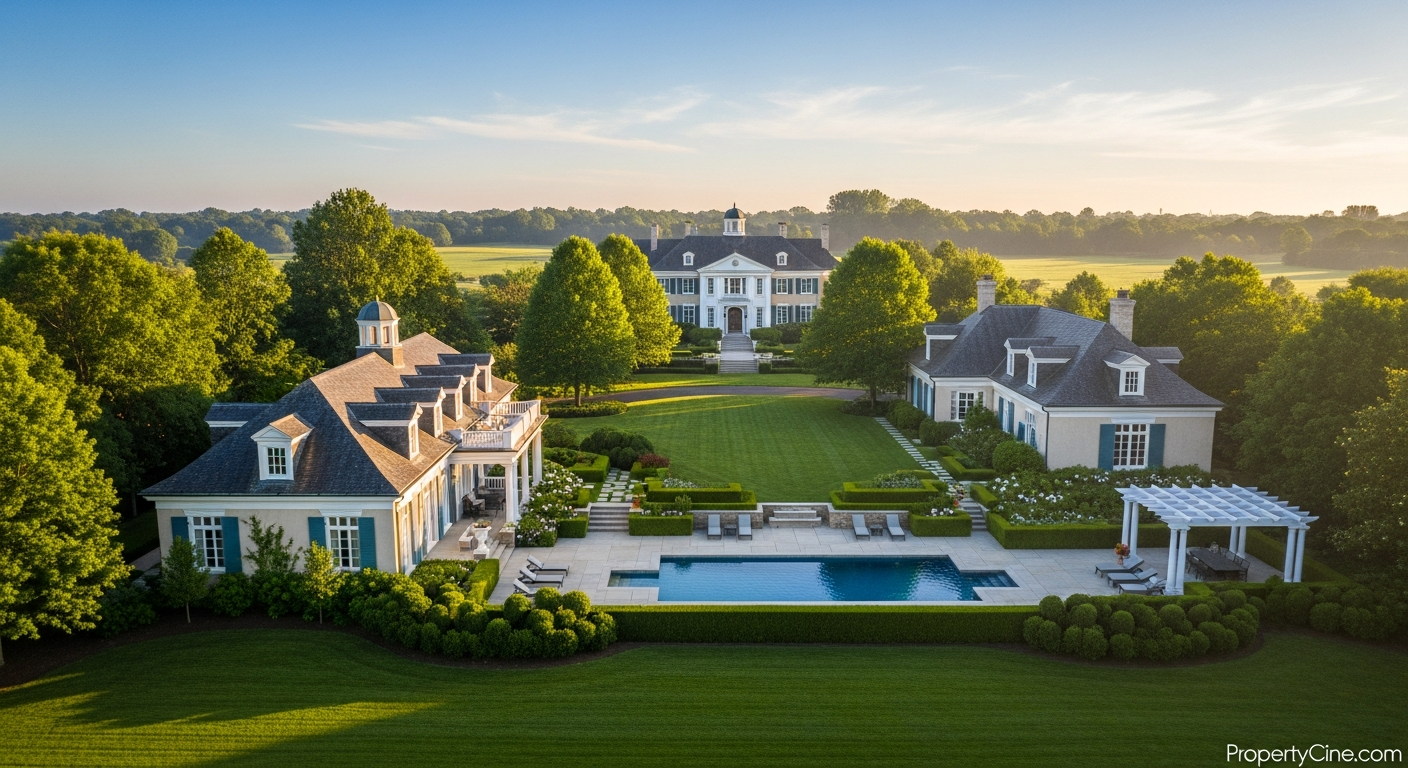
Navigating Drone Video Regulations for Real Estate in 2026
The allure of drone video in real estate is undeniable. Aerial footage offers unparalleled perspectives, showcasing property boundaries, neighborhood amenities, and the overall grandeur of a listing in a way traditional photography simply cannot. However, as this technology becomes more accessible, so too do the regulatory frameworks governing its use. For real estate professionals, staying informed about drone video regulations real estate 2026 is not just about compliance; it's about maintaining professionalism, avoiding costly penalties, and building client trust.
Operating drones for commercial purposes, including real estate marketing, falls under specific federal and often local rules. Understanding these regulations is critical for any agent looking to leverage aerial visuals safely and legally. This guide will walk you through the essential rules, offer actionable strategies, and introduce a framework to ensure your drone operations are always above board.
The Foundation: FAA Part 107 for Commercial Operations
In the United States, the Federal Aviation Administration (FAA) governs all airspace. For any real estate agent using a drone to market a property—even if they're not charging a separate fee for the drone footage—it's considered a commercial operation. This means you generally need an FAA Remote Pilot Certificate, often referred to as a Part 107 license.
Why Part 107 is Non-Negotiable for Real Estate:
* Commercial Use Defined: The FAA defines "commercial use" broadly. If you're using a drone to help sell a property, generate leads, or promote your business, it's commercial. This applies even if you own the drone and operate it yourself.
* Safety and Airspace Knowledge: The Part 107 exam tests your knowledge of airspace classifications, weather, drone operations, and emergency procedures. This ensures you understand how to operate safely and minimize risks to people and property.
* Legal Protection: Operating without a Part 107 certificate for commercial purposes can result in significant fines and legal repercussions. Compliance protects you and your brokerage.
The process involves passing an aeronautical knowledge test at an authorized testing center and undergoing a background check. The certificate is valid for two years and requires recurrent training or re-testing to maintain.
Understanding Airspace and Waivers
Even with a Part 107 certificate, where you can fly is highly regulated. The National Airspace System (NAS) is divided into various classifications, and flying in certain areas requires special authorization.
* Controlled Airspace (Class B, C, D, E): These areas surround airports and often require authorization before flight. The Low Altitude Authorization and Notification Capability (LAANC) system is a game-changer here, allowing near real-time authorization for flights in controlled airspace up to certain altitudes. Many agents find LAANC an indispensable tool for their urban and suburban listings.
* Uncontrolled Airspace (Class G): Generally, you can fly in Class G airspace without explicit FAA authorization, provided you adhere to Part 107 rules (e.g., maximum altitude of 400 feet above ground level, line-of-sight operation).
* Temporary Flight Restrictions (TFRs): These are temporary restrictions around major sporting events, wildfires, presidential movements, or other special circumstances. Always check for TFRs before any flight.
* Waivers and Authorizations: For operations that fall outside standard Part 107 rules (e.g., flying at night, flying over people, beyond visual line of sight), you'll need to apply for a specific FAA waiver or authorization. While complex, these can expand your capabilities for unique real estate opportunities.
The DRONE-READY Framework: Your Pre-Flight Checklist for 2026 Compliance
To simplify the complex landscape of drone regulations, PropertyCine introduces The DRONE-READY Framework. This actionable guide helps real estate professionals ensure every aerial video shoot is compliant, ethical, and successful.
D - Documentation & Designation:
* Part 107 Certificate: Ensure your FAA Remote Pilot Certificate is current and renewed.
* Drone Registration: All drones weighing 0.55 lbs (250 grams) or more must be registered with the FAA.
* Waivers/Authorizations: If operating outside standard Part 107 rules (e.g., night flights), obtain necessary FAA waivers.
R - Right-of-Way & Airspace:
* LAANC Check: Use LAANC (Low Altitude Authorization and Notification Capability) or FAA DroneZone to verify airspace and obtain authorization for controlled airspace.
* TFR Check: Always check for Temporary Flight Restrictions (TFRs) before flight using FAA resources.
* Altitude Limits: Adhere to the 400-foot AGL (Above Ground Level) maximum altitude, unless specific waivers or airspace rules permit otherwise.
O - Owner & Property Consent:
* Client Authorization: Secure explicit written permission from the property owner to conduct drone operations on and around their property.
* Adjacent Property Considerations: Be mindful of neighboring properties. While not always legally required, securing consent or at least providing notice to immediate neighbors can prevent disputes and enhance community relations.
* Private Property Rights: Understand that even if you have FAA clearance, private property owners can restrict take-off, landing, or operation over their land.
N - Neighbor Notification & Privacy:
* Privacy Concerns: Drones can capture images of people and private spaces. Inform potential neighbors of your intent to fly, if practical, and avoid intrusive footage of private individuals or their property.
* Time of Flight: Consider flying at times that minimize disruption to neighbors (e.g., not during early morning hours or late evenings).
* Data Handling: Establish clear protocols for storing and using drone footage, especially any that might inadvertently capture private individuals or their property.
E - Ethical Operations & Equipment:
* Visual Line of Sight (VLOS): Maintain direct visual line of sight with your drone at all times. Use a visual observer if needed to assist.
* Safety Protocols: Conduct pre-flight checks, monitor weather conditions, and have an emergency plan.
* Equipment Maintenance: Ensure your drone and its components (batteries, propellers) are well-maintained and in good working order.
* Ethical Marketing: Use drone footage to accurately represent the property. Avoid misleading angles or enhancements that misrepresent the listing.
Emerging Trends and What to Watch for in 2026
While drone regulations evolve incrementally, several areas could see significant shifts by 2026:
* Remote ID Enforcement: The FAA's Remote ID rule, requiring drones to broadcast identification and location information, is fully effective. Ensure your drone complies or purchase a broadcast module if needed. This enhances safety and security but requires ongoing awareness from operators.
* Operations Over People and Night Operations: These waivers are becoming more common, potentially simplifying permissions for real estate agents to capture unique footage, though strict safety protocols will always apply.
* State and Local Regulations: While the FAA controls airspace, states and local municipalities can regulate drone launch/landing sites and privacy. Always check local ordinances for parks, beaches, or specific neighborhoods.
* Data Privacy Laws: Beyond drone-specific regulations, general data privacy laws (like CCPA or potential federal privacy laws) could impact how real estate agents collect, store, and use aerial footage that might capture individuals or their private property. Transparency and consent will remain paramount.
Drone Video Script Template (60-90 Seconds)
Here’s a template for a compelling drone video script, focusing on showcasing a property's unique appeal while adhering to ethical standards.
Video Title: [Property Address] – Expansive Living in [Neighborhood Name]
Length: 60-90 Seconds
Target Audience: High-intent buyers interested in lifestyle and location.
(0-5 seconds) OPENING SHOT:
* Visual: Smooth, high-altitude reveal shot of the entire property and its immediate surroundings. Gentle descent.
* Voiceover: "Welcome to [Property Address], a stunning residence nestled in the heart of [Neighborhood Name]. Experience [unique selling point, e.g., unparalleled privacy / vibrant community access]."
(5-20 seconds) PROPERTY OVERVIEW:
* Visual: Continue descent, focusing on roofline, property size, lush landscaping, and prominent outdoor features (pool, large yard, garden).
* Voiceover: "From above, the expansive grounds truly come to life. Notice the generous lot size, meticulously maintained landscaping, and the sparkling [pool/patio area] – perfect for outdoor living."
(20-40 seconds) NEIGHBORHOOD & AMENITIES:
* Visual: Broad pan showing nearby amenities – parks, golf course, lake, school, main road (without focusing on specific private homes). Highlight the property's advantageous position.
* Voiceover: "Beyond the property, [Neighborhood Name] offers incredible convenience. Enjoy close proximity to [mention 2-3 key amenities like: top-rated schools, local parks, charming downtown area, easy highway access]."
(40-60 seconds) UNIQUE FEATURES & LIFESTYLE:
* Visual: Focus on specific architectural details from an elevated angle, a unique outdoor feature, or the property's relationship to a natural landscape (e.g., waterfront, mountain views). Gradually transition to ground-level exterior shots if desired.
* Voiceover: "Imagine waking up to [specific benefit, e.g., breathtaking sunrises / serene views of the conservancy]. This home isn't just a place to live; it's a lifestyle waiting to be embraced. Whether it's the [unique architectural feature] or the [spacious outdoor entertainment area], every detail contributes to an exceptional living experience."
(60-75 seconds) CALL TO ACTION & BRANDING:
* Visual: Gentle pull-back to show the full property one last time, with agent/brokerage logo subtly appearing.
* Voiceover: "Discover the full potential of [Property Address]. For a private showing and to explore everything this exceptional home offers, contact [Your Name/Team Name] today."
Email Subject Line Templates for Drone Footage
Effective communication ensures everyone is informed and excited about your listings, even when incorporating new tech like drones.
* "See [Property Address] From a New Perspective: Drone Video Inside!"
* "Elevate Your View: New Drone Tour of [Neighborhood Name] Gem"
* "Beyond the Listing Photos: Stunning Aerial Video of [Property Type]"
* "Heads Up: Drone Operations Planned Near [Property Address] on [Date]"
* "Neighbor Courtesy Notice: Aerial Photography for [Address] Soon"
* "Did You Catch the Aerial Tour of [Property Address]?"
* "Recap: [Property Address] Drone Video & Key Features"
Comparison: Part 107 Certified Pilot vs. Recreational Drone Use
Understanding the difference between commercial and recreational drone operations is fundamental for real estate agents. Mixing these up can lead to significant legal issues.
| Feature | Part 107 Certified Pilot (Commercial) | Recreational Drone User |
|---|---|---|
| Purpose | Any activity for business, compensation, or furthering a business (e.g., real estate marketing). | Purely for personal enjoyment, hobby. |
| Certification | Required: FAA Remote Pilot Certificate (Part 107). | Not required. |
| Drone Registration | Required. | Required. |
| Airspace Authorization | Required for controlled airspace (LAANC or FAA DroneZone). | Required for controlled airspace (LAANC or B4UFLY app). |
| Max Altitude | 400 feet AGL (unless authorized). | 400 feet AGL. |
| Rules/Regulations | Strict Part 107 operational rules, waivers possible. | Follows recreational rules, "The Exception for Limited Recreational Operations." |
| Operations Over People | Generally restricted, requires waiver or specific drone category. | Generally restricted. |
| Night Operations | Generally restricted, requires waiver or anti-collision lights. | Generally restricted, requires anti-collision lights. |
| Legal Use for Real Estate | Required for any real estate marketing. | Not permitted for real estate marketing. |
When to Use Which: For real estate, the choice is clear: if you are marketing a property, generating leads, or promoting your business, a Part 107 certified pilot is always required. Attempting to use a drone for real estate under "recreational" rules is a direct violation of FAA regulations.
Ethical Considerations in Real Estate Drone Video
Beyond legal compliance, ethical considerations are paramount for maintaining a professional reputation and trust within the community.
* Privacy of Neighbors: Drone cameras have a wide field of view. While capturing the appeal of your listing, ensure you are not inadvertently invading the privacy of neighboring properties or individuals. Avoid direct, close-up shots into private windows or backyards. Anonymized patterns of successful agents indicate that respecting neighbors' privacy fosters goodwill and avoids complaints.
* Accurate Representation: Drone footage should enhance, not misrepresent, a property. Avoid angles or editing that could create a false impression of property size, condition, or surrounding environment. Transparency builds long-term trust.
* Data Security: If you collect any identifiable information through drone footage (unlikely for typical real estate marketing, but possible with advanced analytics), ensure it's handled securely and in compliance with privacy laws.
* Noise and Disruption: Drones produce noise. Be mindful of flight times, especially in quiet residential areas. Informing neighbors can mitigate potential complaints.
Key Takeaways
* Any drone use for real estate marketing requires an FAA Part 107 Remote Pilot Certificate.
* Always check airspace using LAANC or FAA DroneZone and be aware of TFRs.
* Secure explicit written consent from property owners for drone operations.
* Be mindful of neighbor privacy and potential disruption.
* The DRONE-READY Framework provides a comprehensive pre-flight checklist for compliance and ethics.
* Stay updated on evolving FAA rules, especially regarding Remote ID and state/local ordinances.
FAQ
Q1: Do I really need a Part 107 license if I'm not charging for drone footage?
A1: Yes. If you're using drone footage to market a property, generate leads, or promote your real estate business, the FAA considers it a commercial operation, regardless of whether you charge a separate fee for the drone services.
Q2: What is LAANC and why is it important for real estate agents?
A2: LAANC (Low Altitude Authorization and Notification Capability) is an FAA system that provides near real-time authorization for drone flights in controlled airspace (around airports). It's crucial for agents needing to fly in urban or suburban areas where many properties are located near airports.
Q3: Can I fly my drone at night for real estate videos?
A3: Under Part 107, night operations are permitted if the remote pilot has completed recurrent training after April 6, 2021, and the drone has an anti-collision light visible for at least 3 statute miles. Earlier Part 107 certificates required a specific waiver for night operations. Always verify current FAA rules.
Q4: What about privacy concerns when flying a drone near other homes?
A4: While the FAA governs airspace, local laws often address privacy. Ethically, you should avoid capturing intrusive footage of neighboring properties or individuals. Informing neighbors of your flight plans, if practical, can help prevent privacy disputes.
Q5: Are there specific drone models recommended for real estate?
A5: Popular drones like the DJI Mavic series (Air 3, Mini 4 Pro, Mavic 3 Pro) are widely used for real estate due to their portability, camera quality, and ease of use. The choice often depends on budget, desired image quality, and specific features.
Q6: What if my drone weighs less than 250 grams (like DJI Mini)? Do I still need Part 107?
A6: Yes. While drones under 250 grams do not need to be registered for recreational use, they do require a Part 107 certificate when used for commercial purposes (like real estate marketing).
Q7: How often do FAA drone regulations change, and how can I stay updated?
A7: FAA regulations can evolve. The best ways to stay updated are to regularly check the FAA's website (faa.gov/uas), subscribe to industry newsletters, and engage with professional drone pilot communities.
Q8: Can state or local governments create their own drone regulations?
A8: Yes, while the FAA regulates the national airspace, state and local governments can create laws regarding drone launch/landing sites (e.g., in parks or public property) and certain privacy issues. Always check local ordinances in your operating area.
Final Steps: Optimize Your Drone Footage
Once you've captured stunning, compliant drone footage, the next step is to ensure it reaches its full potential in your marketing strategy. Integrating aerial video with high-quality interior and exterior shots creates a comprehensive listing presentation. Consider using tools that can seamlessly combine your diverse media assets. This holistic approach, from compliant capture to compelling presentation, is how agents consistently attract more serious inquiries.
Ready to transform your property photos into cinematic videos, complementing your aerial footage with stunning interior tours? Learn more about AI-powered real estate video at PropertyCine.
Continue Your Learning
Explore more insights from our real estate marketing blog:
- Optimizing Real Estate Video for Google Discover: Get Seen by High-Intent Buyers
- Predictive AI for Real Estate Video Engagement: Boost Conversions
- YouTube Shorts Strategy for Real Estate Agents: Go Viral & Win Leads
Ready to transform your property listings? PropertyCine makes it easy to create stunning cinematic videos from your listing photos. Get started free today.

Turn Your Listing Photos Into Stunning Videos
Upload your property photos and our AI creates cinematic videos with natural motion - curtains sway, water ripples, light shifts. Ready in ~5 minutes.
Try Free - No Credit CardContinue Reading
PropertyCine Team
Expert insights on real estate video marketing and AI technology.
Related Articles
Navigating Real Estate Video Marketing Compliance: Your Essential Guide
Crafting an Effective Real Estate Economic Outlook Video Strategy
Navigating Uncertainty: Your Guide to Real Estate Economic Outlook Video
Creating Impactful Real Estate Economic Outlook Video: Your Guide to Market Authority
Authenticity in AI Real Estate Video: Building Trust in 2026
Ensuring Ethical AI Practices in Real Estate Video Production
Create Stunning Property Videos Today
Transform your listing photos into cinematic videos with AI.
Get Started Free