
Navigating Drone Video Regulations for Real Estate in 2026: A Realtor's Guide
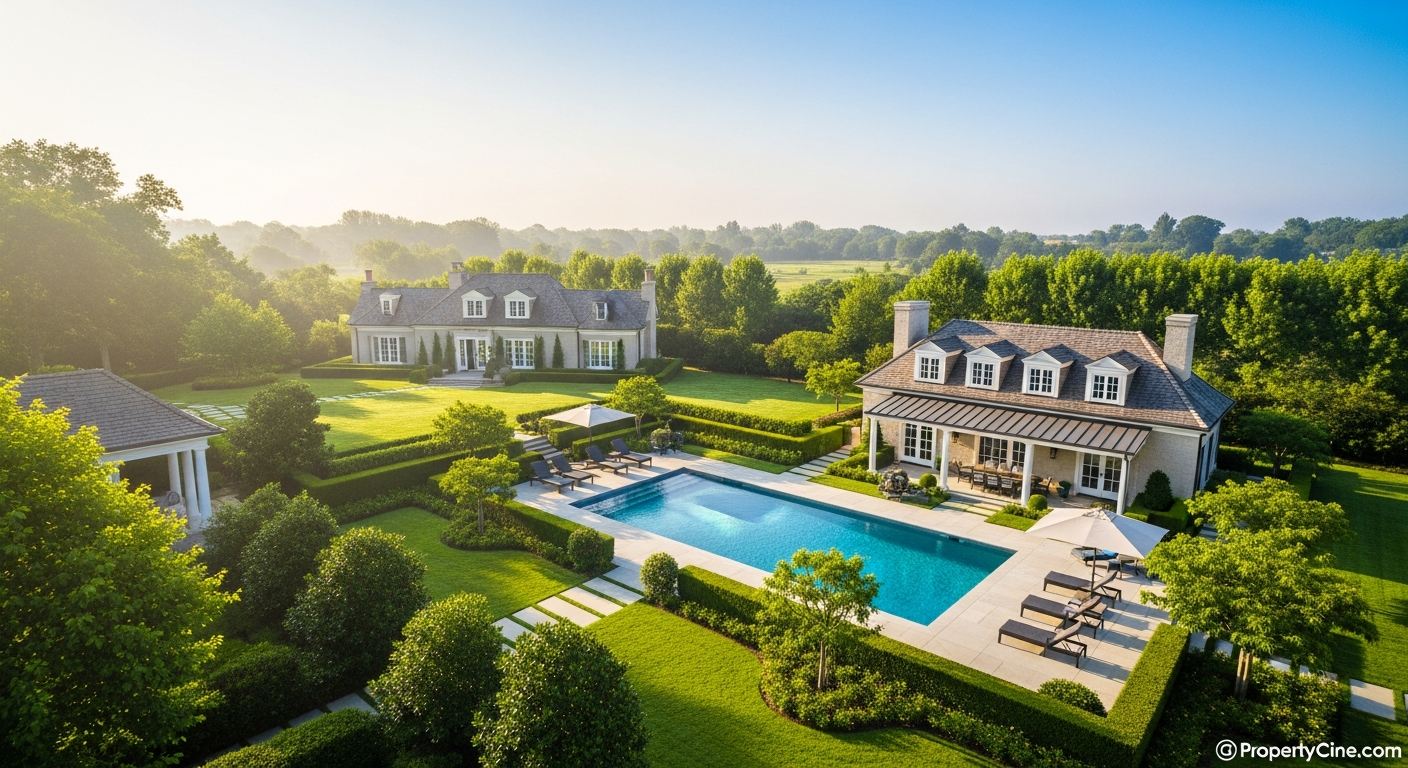
Drone video has transformed how properties are showcased, offering stunning aerial perspectives that static photos simply can't match. For real estate agents, this technology presents a powerful marketing advantage, allowing potential buyers to see a property's scale, surroundings, and unique features from above. However, the skies are not limitless, and operating drones for commercial purposes, including real estate, comes with a set of regulations that are continually updated.
As we look towards drone video regulations real estate 2026, staying informed is not just good practice—it's a legal necessity. Non-compliance can lead to hefty fines, legal disputes, and reputational damage. This guide will walk you through the essential rules, provide actionable advice, and introduce a simple framework to ensure your aerial property marketing remains both spectacular and compliant.
The AERIAL Compliance Check: Your Drone Regulation Framework
To help real estate professionals navigate the complexities of drone operations, we've developed the AERIAL Compliance Check. This framework simplifies the key areas you need to consider before launching your drone for any property listing.
- Airspace: Understanding where you can and cannot fly.
- Equipment: Ensuring your drone is registered and maintained.
- Registrations: Holding the necessary pilot certifications.
- Insurance: Protecting yourself and your business.
- Authorizations: Obtaining waivers or permissions when needed.
- Local Rules: Complying with state, county, and city-specific ordinances.
By systematically addressing each point in the AERIAL framework, you can significantly reduce your risk and operate with confidence.
Core Federal Regulations: FAA Part 107 in 2026
The Federal Aviation Administration (FAA) governs all airspace in the United States, and its Part 107 rulebook is the foundation for commercial drone operations. As we head into 2026, the core principles of Part 107 remain steadfast, with potential minor updates.
What Part 107 Requires for Real Estate Agents:
Understanding these foundational rules is paramount. Imagine an agent who uses a drone to capture footage of a sprawling estate, but unknowingly flies through controlled airspace without authorization. This simple oversight could lead to significant penalties, highlighting the need for thorough preparation.
Navigating State and Local Drone Laws
While the FAA sets the overarching federal guidelines, individual states, counties, and cities can implement their own specific drone laws. These often pertain to privacy, trespassing, and noise ordinances.
Key Considerations for State and Local Rules:
- Privacy Concerns: Some states have laws regarding flying over private property, especially if it's considered an invasion of privacy. Always be mindful of neighbors and respect privacy boundaries.
- Local Ordinances: Cities and municipalities may have specific no-fly zones, noise restrictions, or permit requirements for commercial drone operations, particularly in public parks or near government buildings. Always check with local authorities (e.g., city clerk's office, police department) before flying in a new area.
- Trespassing: Ensure your drone's flight path doesn't intentionally or repeatedly cross into private property without consent, even if you're not physically on the land.
This layered regulatory environment means that a comprehensive pre-flight check should always include local rules.
Ethical Considerations and Best Practices
Beyond legal compliance, operating a drone for real estate also involves ethical responsibilities. Building trust with clients and the community is vital.
- Consent and Notification: Always inform property owners and, if possible, immediate neighbors of your intent to fly a drone. This simple courtesy can prevent misunderstandings and complaints.
- Data Privacy: Be mindful of what your drone camera captures. Avoid filming individuals without their consent and blur or remove any sensitive information inadvertently recorded.
- Professionalism: Operate your drone safely and considerately. Avoid flying too close to homes, making excessive noise, or causing any disturbance.
Practical Steps for Real Estate Agents
Here's a step-by-step process to ensure your drone operations are compliant and effective:
* Check weather conditions (wind, rain, visibility).
* Verify airspace using apps like B4UFLY, AirMap, or Aloft.
* Obtain LAANC authorization if needed for controlled airspace.
* Research state and local drone laws for your specific property location.
When to Outsource vs. Fly Yourself: A Decision Framework
Deciding whether to obtain your Part 107 license or hire a professional drone pilot is a common dilemma for real estate agents.
| Feature | Flying Yourself (with Part 107) | Hiring a Professional Drone Pilot |
|---|---|---|
| Cost | Initial investment (certification, drone, insurance) + ongoing time | Per-project fee; no initial equipment cost for you |
| Control & Flexibility | Full creative control; on-demand availability | Dependent on pilot's schedule; clear communication is key |
| Compliance Burden | Fully responsible for all FAA, state, local regulations, maintenance | Pilot handles all compliance, licensing, insurance, pre-flight checks |
| Expertise | Requires continuous learning, practice, and equipment knowledge | Specialized skills in flight, camera operation, editing |
| Insurance Responsibility | Your own commercial drone liability insurance is essential | Pilot's insurance covers their operations |
| Time Investment | Significant time for training, flight planning, execution, editing | Saves agent time; focus on client relations and sales |
When to Fly Yourself:
If you plan to use drone footage frequently, enjoy technology, are willing to invest in training and equipment, and prioritize immediate access/creative control.
When to Hire a Professional:
If drone use is occasional, you prefer to focus on sales, or if the property requires complex flight paths, specialized equipment, or operations in highly regulated areas. Professionals often have higher-end equipment and advanced editing skills, potentially leading to more polished final products. This can also save you time, which you could use for other aspects of your marketing, like optimizing all your property videos for search. Learn more about getting your videos seen with our guide on Optimizing Real Estate Video for Google Discover: Get Your Listings Seen.
Templates for Drone Video Marketing
Leverage these templates to communicate effectively and market your properties with drone footage.
Email Subject Line Templates
60-90 Second Drone Video Script Template
Video Type: Property Highlight with Drone Footage
Goal: Showcase property and its surroundings, generate interest.
(0-5 seconds) Opening Shot: Dynamic drone shot sweeping over the property, revealing its context within the neighborhood/landscape. Text overlay: "[Property Address] - Your Next Home Awaits."
(5-20 seconds) Narrator (Voiceover): "Welcome to [Property Address], a stunning residence situated in the heart of [Neighborhood Name]. Beyond its elegant interiors, this home offers unparalleled connection to its surroundings."
(20-40 seconds) Visuals: Transition to interior shots, highlighting key features (e.g., kitchen, living room, master suite).
(40-60 seconds) Narrator (Voiceover): "With [mention a key interior feature, e.g., spacious open-concept design] and [another feature, e.g., natural light flooding every room], this property perfectly blends comfort with modern living."
(60-80 seconds) Visuals: Return to drone footage, showing the property's exterior, yard, and proximity to local amenities (park, lake, downtown, etc.). Text overlay: "Explore the [Neighborhood Name] Lifestyle."
(80-90 seconds) Narrator (Voiceover): "Imagine morning coffee on your [Patio/Deck], enjoying the tranquil [View type]. This isn't just a house; it's a lifestyle. Contact [Your Name/Team] today to schedule your private showing of [Property Address]."
(90 seconds) Call to Action: On-screen text: "Visit [Your Website] | Call [Your Phone Number] | [Your Name/Team]."
Follow-Up Message Template (for drone video inquiries)
Medium: Email / Direct Message
Subject: Re: Your Interest in [Property Address] - Aerial Tour
Hi [Prospect Name],
Thank you for your interest in [Property Address]. I'm glad you enjoyed the drone video tour! It truly provides a unique perspective on this exceptional property and its surroundings in [Neighborhood Name].
What aspects of the property or the aerial views stood out to you most? I'd be happy to answer any specific questions you might have or provide more details on features like [mention a specific feature, e.g., the expansive backyard, proximity to local trails].
Would you be interested in a private showing to experience [Property Address] firsthand? We could also discuss how this home fits your specific needs.
Looking forward to hearing from you.
Best regards,
[Your Name]
[Your Title]
[Your Phone Number]
[Your Website]
FAQ
Q1: Do I need a license to use a drone for real estate photos and videos?
A1: Yes, if you are using the drone to benefit your real estate business (e.g., marketing listings, generating leads), you are operating commercially and must possess an FAA Part 107 Remote Pilot Certificate.
Q2: What are the main FAA rules for commercial drone use in real estate?
A2: Key rules include holding a Part 107 certificate, registering your drone, flying within visual line of sight, adhering to altitude limits (typically 400 feet AGL), and obtaining airspace authorizations for controlled airspace.
Q3: Can I fly a drone over any private property for real estate purposes?
A3: You must have permission from the property owner to fly over their land. Additionally, be mindful of privacy laws and local trespassing ordinances, avoiding flying over neighboring properties without consent, especially if it could be considered an invasion of privacy.
Q4: How do I check for airspace restrictions before flying?
A4: Use FAA-approved apps like B4UFLY, AirMap, or Aloft. These tools provide real-time airspace information, including controlled airspace boundaries and any temporary flight restrictions (TFRs).
Q5: What kind of insurance do I need for drone operations in real estate?
A5: Commercial drone liability insurance is highly recommended, if not required by your brokerage or clients. This protects you from potential damages or injuries caused by your drone operation.
Q6: Are state and local drone laws important for real estate agents?
A6: Yes. While the FAA governs airspace, states and local municipalities can impose additional rules regarding privacy, trespassing, noise, and specific no-fly zones within their jurisdiction. Always check local ordinances.
Q7: What happens if I violate drone regulations?
A7: Violations can result in significant civil penalties (fines), suspension or revocation of your Part 107 certificate, and potential criminal charges depending on the severity and nature of the infraction.
Q8: Should I hire a professional drone pilot or get my own Part 107 license?
A8: If you plan frequent drone use and want creative control, getting certified can be beneficial. For occasional use or highly complex shoots, hiring a professional drone pilot saves you time, equipment costs, and ensures compliance and high-quality results.
Key Takeaways
- Compliance with drone video regulations real estate 2026 is non-negotiable for professional agents.
- The AERIAL Compliance Check (Airspace, Equipment, Registrations, Insurance, Authorizations, Local Rules) provides a robust framework for safe and legal operations.
- An FAA Part 107 Remote Pilot Certificate is mandatory for all commercial real estate drone usage.
- Always obtain proper authorizations and respect privacy, considering both federal and local laws.
- Strategic use of drone video, when compliant, significantly enhances property marketing.
Ready to enhance your real estate listings with captivating video content, even for properties that don't allow drone footage? Our platform can transform existing photos into cinematic property tours. Get started creating immersive virtual experiences for your listings today. Learn more about creating engaging visual experiences with our guide on Creating Immersive Virtual Staging Video Tours for Listings.
Start elevating your property marketing with stunning visuals. Try PropertyCine free today and turn your listing photos into cinematic videos.
Continue Your Learning
Explore more insights from our real estate marketing blog:
- Optimizing Real Estate Video for Google Discover: Get Your Listings Seen
- Predictive AI for Real Estate Video Engagement: Boost Conversions
- YouTube Shorts Strategy for Real Estate Agents: Master Short-Form Video
Ready to transform your property listings? PropertyCine makes it easy to create stunning cinematic videos from your listing photos. Get started free today.

Turn Your Listing Photos Into Stunning Videos
Upload your property photos and our AI creates cinematic videos with natural motion - curtains sway, water ripples, light shifts. Ready in ~5 minutes.
Try Free - No Credit CardContinue Reading
PropertyCine Team
Expert insights on real estate video marketing and AI technology.
Related Articles
Navigating Real Estate Video Marketing Compliance: Your Essential Guide
Crafting an Effective Real Estate Economic Outlook Video Strategy
Navigating Uncertainty: Your Guide to Real Estate Economic Outlook Video
Creating Impactful Real Estate Economic Outlook Video: Your Guide to Market Authority
Authenticity in AI Real Estate Video: Building Trust in 2026
Ensuring Ethical AI Practices in Real Estate Video Production
Create Stunning Property Videos Today
Transform your listing photos into cinematic videos with AI.
Get Started Free