
Navigating Drone Video Regulations for Real Estate in 2026
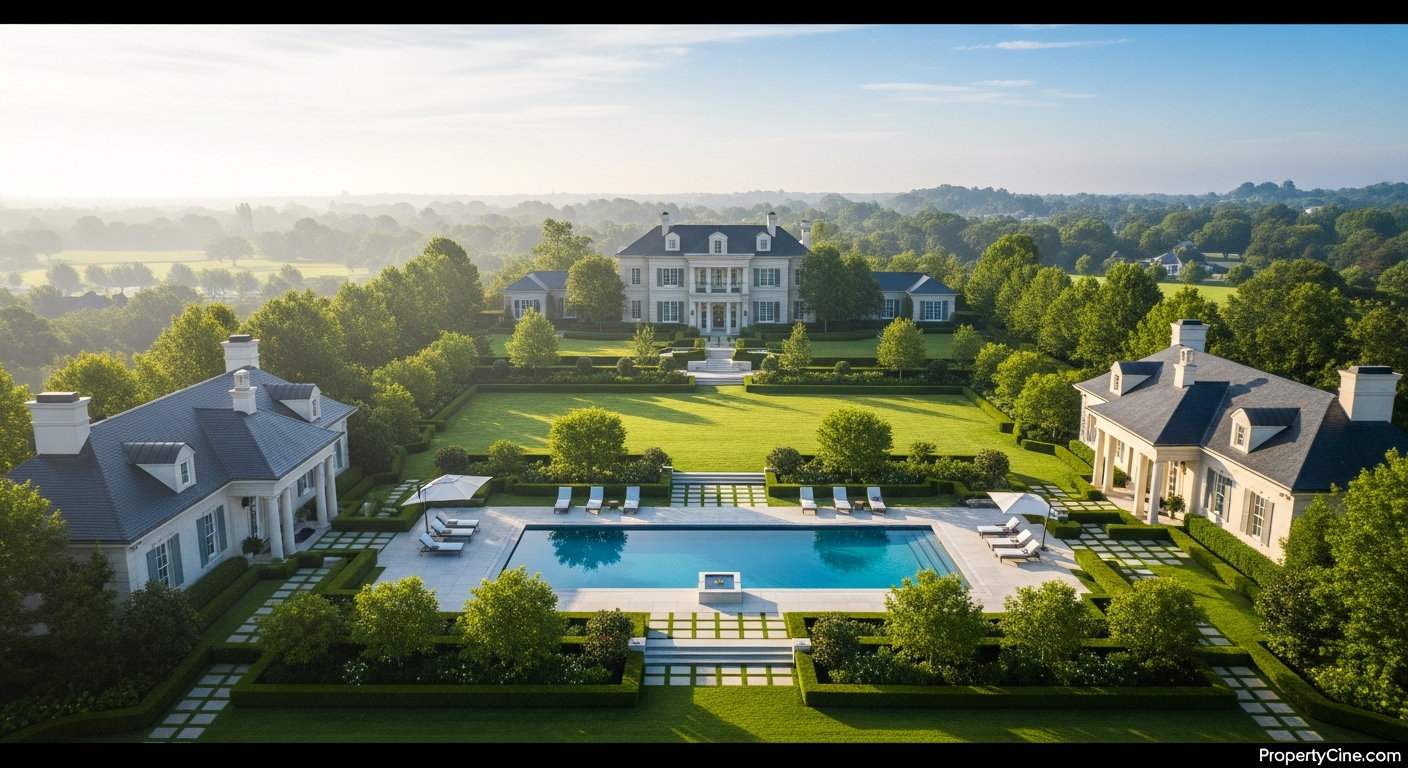
Drone video has transformed real estate marketing, offering breathtaking aerial perspectives that captivate potential buyers and showcase properties like never before. From sprawling estates to urban penthouses, a well-executed drone shot provides context, highlights unique features, and creates an emotional connection. However, the skies are not limitless, and operating drones for commercial purposes, including real estate, is subject to strict and evolving regulations. As we look towards 2026, understanding these drone video regulations real estate 2026 is not just about avoiding penalties—it's about protecting your business, ensuring safety, and upholding your professional reputation.
Ignoring drone laws can lead to significant fines, legal issues, and even criminal charges, not to mention a damaged brand image. This guide will walk you through the essential regulations, anticipate future changes, and provide actionable strategies to keep your real estate drone operations fully compliant and effective.
Why Drone Compliance Isn't Just a "Good Idea" – It's Essential
Operating a drone for commercial real estate marketing without adhering to regulations carries substantial risks. Beyond simply following the law, compliance underpins professionalism and client trust.
Legal Risks and Penalties
The Federal Aviation Administration (FAA) is the primary regulatory body for drones in the United States. Violating their rules, particularly FAA Part 107 for commercial operations, can result in:
* Significant Fines: Non-compliance can lead to civil penalties reaching tens of thousands of dollars per violation.
* Suspension or Revocation of Pilot Certificate: If you hold a Part 107 certificate, it can be suspended or revoked, barring you from future commercial drone operations.
* Legal Action: Operating negligently or violating airspace rules can lead to lawsuits for property damage, personal injury, or privacy infringements.
Credibility and Professionalism
In the competitive real estate market, trust is paramount. An agent who operates compliantly demonstrates professionalism and attention to detail. Conversely, an agent known for risky or illegal drone practices quickly erodes client confidence and market standing. Safety should always be a top priority, protecting both the pilot and the public.
Safety and Public Perception
Drones, while impressive, can pose risks if operated improperly. Accidents can lead to property damage or injury. Operating safely and within regulations ensures public trust and maintains a positive image for the real estate industry's use of technology.
Key Federal Drone Regulations for Real Estate (FAA Part 107)
For any real estate professional or their hired pilot using a drone for commercial gain, the FAA's Small Unmanned Aircraft Rule (Part 107) is the foundational requirement in the United States.
Remote Pilot Certificate (Part 107)
The most critical requirement is that anyone operating a drone for commercial purposes must hold a Remote Pilot Certificate with a Small Unmanned Aircraft System (sUAS) rating. This involves:
This certification must be renewed every 24 calendar months by passing an online recurrent training course or retaking the knowledge test.
Aircraft Registration
All drones weighing 0.55 pounds (250 grams) or more must be registered with the FAA. This includes most drones capable of professional-grade real estate video capture. Each drone needs a unique registration number prominently displayed on the aircraft.
Operational Rules
Part 107 outlines specific operational limitations:
* Visual Line of Sight (VLOS): The drone must remain within the pilot's visual line of sight at all times, or within the visual line of sight of a visual observer (VO) who is in direct communication with the pilot.
* Maximum Altitude: Flights are generally limited to 400 feet above ground level (AGL), or 400 feet above a structure if flying within a 400-foot radius of that structure.
* Daylight Operations: Drones can be operated during daylight hours and civil twilight (30 minutes before sunrise to 30 minutes after sunset) with proper anti-collision lighting.
* No Operations Over People: Drones cannot fly over people unless those people are directly participating in the operation or are under a covered structure/stationary vehicle that can provide reasonable protection. Category 2 and 3 drones with specific FAA approval can fly over people.
* Airspace Authorizations: Operations in controlled airspace (Class B, C, D, E around airports) require prior authorization from the FAA via LAANC (Low Altitude Authorization and Notification Capability) or DroneZone.
* No Operations from a Moving Vehicle: Drones cannot be operated from a moving land or water vehicle, unless in a sparsely populated area and not transporting property for compensation.
Waivers and Authorizations
For operations that fall outside standard Part 107 rules (e.g., beyond visual line of sight, night operations without anti-collision lights, flying over people with non-compliant drones), pilots can apply for waivers or airspace authorizations from the FAA. These require demonstrating that the operation can be conducted safely.
Anticipating 2026: Potential Shifts and Emerging Trends
While the core of Part 107 is expected to remain, the drone regulatory landscape is always evolving. Here’s what real estate professionals should consider as we approach 2026:
Remote ID Enforcement
Remote ID for drones is already largely in effect, requiring most drones to broadcast their identification and location information. By 2026, full compliance and enforcement are expected to be robust. Agents or pilots must ensure their drones are equipped with standard Remote ID (built-in) or broadcast modules. This enhances airspace safety and accountability.
Increased Local Ordinances and Privacy Concerns
Beyond federal rules, state and local governments are increasingly enacting their own drone laws, often focusing on privacy, noise, and specific flight restrictions in sensitive areas. Always check local ordinances in addition to federal guidelines. The use of drone video inherently touches upon privacy, making it crucial to be mindful of neighboring properties and individuals.
Insurance Considerations
As drone use becomes more widespread, comprehensive liability insurance specifically for drone operations will be even more critical. Standard business liability policies may not cover drone-related incidents. Always ensure your policy covers commercial drone flights for real estate.
Technological Advancements and Their Regulatory Impact
Innovations like AI-powered flight assistance, enhanced collision avoidance, and quieter drone designs could influence future regulations, potentially leading to more permissive rules in certain areas, or stricter requirements for new capabilities. Staying informed about technology will be key.
The F.L.Y. Safe Framework for Compliant Drone Video
To simplify compliance and safe operations, consider adopting The F.L.Y. Safe Framework:
* Flight Plan & Pre-Check:
* Assess the property and surrounding area for potential hazards (power lines, trees, obstacles).
* Check weather conditions (wind, rain, temperature) using reliable aviation weather sources.
* Review airspace restrictions via LAANC or other FAA-approved apps for any Temporary Flight Restrictions (TFRs) or NOTAMs (Notices to Airmen).
* Confirm your drone is fully charged, props are secure, and all systems are operational.
* Legal Compliance:
* Verify the pilot holds a current FAA Part 107 Remote Pilot Certificate.
* Confirm the drone is registered with the FAA and displays its registration number.
Obtain necessary airspace authorizations via LAANC before* flight.
* Be aware of and comply with all state and local drone ordinances.
* Your Responsibilities:
* Ensure adequate drone liability insurance is in place.
* Maintain detailed flight logs, including date, time, location, pilot, and observations.
* Regularly inspect and maintain your drone equipment.
* Prioritize ethical decision-making regarding privacy and community impact.
* Safety First:
* Always maintain visual line of sight with the drone.
* Keep operations within 400 feet AGL.
* Avoid flying over non-participating individuals or moving vehicles.
* Have a clear emergency plan, including battery failure procedures.
* Ethical Engagement:
* Obtain explicit consent from property owners for drone footage.
* Notify immediate neighbors if drone flight might impact their privacy or property.
* Avoid capturing identifiable features of neighboring properties or people without consent.
* Be transparent about the purpose of the drone flight.
Hiring a Professional vs. Doing It Yourself: A Compliance Perspective
When considering drone video for your real estate listings, agents face a choice: hire a certified drone pilot or get certified and operate the drone themselves. Each path has distinct compliance implications.
| Aspect | Hiring a Certified Pilot | Self-Operating (with Part 107) |
|---|---|---|
| Compliance Burden | Pilot is responsible for Part 107 adherence, LAANC, etc. Agent primarily verifies pilot's credentials. | Agent (as pilot) is fully responsible for all Part 107 compliance, maintenance, etc. |
| Expertise | Access to experienced pilots who specialize in aerial cinematography and complex waivers. | Requires significant learning, practice, and continuous education to maintain skills and stay current with regulations. |
| Equipment Cost | No upfront equipment purchase for the agent. | Significant upfront investment in drone, camera, accessories, software, maintenance. |
| Time Investment | Minimal time for the agent beyond scheduling. | Substantial time for training, certification, pre-flight checks, flight execution, and post-production. |
| Liability | Pilot's insurance typically covers drone operation. Agent should ensure they are a named insured or have their own general liability. | Agent is directly liable. Requires specialized drone liability insurance. |
| Flexibility | Dependent on pilot's availability. | Full control over scheduling and creative direction, within legal limits. |
When to Choose Which:
* Hire a Certified Professional: Best for agents who want to minimize their personal compliance burden, need highly specialized shots, or don't have the time/budget for equipment and training. It offers peace of mind regarding legal adherence and professional execution.
* Self-Operate (with Part 107): Ideal for agents who are passionate about technology, willing to invest in training and equipment, and want complete creative control and flexibility. This path requires a significant, ongoing commitment to compliance and skill development.
Actionable Templates for Your Compliant Drone Video Strategy
Integrating compliant drone video into your marketing requires clear communication. Here are some templates to help:
Email Subject Line Templates
Use these to announce your drone video service or coordinate shoots:
Drone Video Script Template (60-90 seconds)
This template assumes you have already captured the footage. Focus on what the drone footage reveals.
Video Title: Discover [Property Address]: An Aerial Tour
(0-5 seconds) Opening Shot: Stunning wide-angle drone shot revealing the property in its full context – neighborhood, lot size, unique surroundings.
Voiceover: "Welcome to [Property Address], where every detail matters. From above, you truly appreciate the scale and setting of this exceptional property."
(5-20 seconds) Mid-level drone shot panning across the property's exterior, highlighting key features like landscaping, pool, or unique architectural elements.
Voiceover: "Notice the meticulously maintained [mention a key feature like 'gardens' or 'pool area'] and the generous outdoor living spaces. This aerial view provides a perspective ground photos simply can't capture."
(20-40 seconds) Closer drone shot focusing on a specific, unique selling proposition – e.g., proximity to a park, waterfront access, mountain views, or a large private yard.
Voiceover: "Imagine waking up to these serene [views/natural surroundings]. This property offers [mention unique benefit, e.g., 'unparalleled privacy' or 'direct access to waterfront amenities']. Our drone footage was captured by a certified pilot, ensuring all flight operations were conducted safely and in compliance with FAA regulations."
(40-60 seconds) Smooth transition to a more traditional ground-level shot or interior highlight, or a text overlay with key property stats.
Voiceover: "From the expansive [yard/grounds] to the exquisite interiors, [Property Address] truly embodies [lifestyle/luxury]. Dive deeper into what makes this home extraordinary."
(60-75 seconds) Closing shot: Drone slowly ascends, showing the property again, with contact information or call to action on screen.
Voiceover: "Ready to experience [Property Address] firsthand? Contact [Your Name/Team Name] today for a private showing. This isn't just a home; it's a lifestyle waiting for you."
Follow-Up Message Template (after a showing, including drone video)
Subject: Following Up: Your Visit to [Property Address] & Exclusive Aerials
Hi [Client Name],
It was a pleasure showing you [Property Address] today. I hope you enjoyed exploring the home.
To give you an even fuller perspective, here's a link to the property's drone video tour: [Link to Drone Video]. It beautifully showcases the [mention key feature highlighted by drone, e.g., "expansive lot," "proximity to the lake," "neighborhood amenities"] from an angle you won't get anywhere else.
We ensure all our aerial footage is captured by FAA-certified pilots, adhering to all local and federal regulations for your peace of mind and safety.
Please let me know if you have any questions or would like to revisit the property.
Best regards,
[Your Name]
[Your Contact Information]
Beyond the Shot: Maximizing Your Compliant Drone Footage
Capturing compliant drone footage is just the first step. To truly unlock its value, integrate it strategically into your broader marketing efforts. High-quality drone videos can be seamlessly incorporated into virtual tours and property showcases. Consider how this footage fits into your overall Optimizing Real Estate Video for Google Discover: Get Your Listings Seen strategy. Furthermore, leveraging advanced analytics on your video content can provide insights into viewer engagement and preferences. Learn more about How AI-Powered Real Estate Video Analytics Is Revolutionizing Marketing to fine-tune your approach.
Ethical Considerations: Privacy and Property Rights
Beyond legal compliance, ethical drone operation is crucial.
* Privacy: Always prioritize the privacy of neighbors and the public. Avoid lingering over neighboring properties or capturing identifiable images of people without consent. Informing neighbors of your flight plans can prevent complaints.
* Consent: Obtain clear consent from the property owner for all drone operations and footage use.
* Respect Boundaries: Be mindful of private property lines, even from the air. Avoid flying directly over or recording into private spaces that are not part of your client's property.
Adopting a "good neighbor" policy when flying your drone builds positive community relations and minimizes potential issues.
FAQ
Q1: Do I need a license to fly a drone for real estate?
A1: Yes, any drone operation for commercial purposes, including real estate marketing, requires the pilot to hold an FAA Part 107 Remote Pilot Certificate in the United States.
Q2: Can I just hire any drone operator for my listings?
A2: You should only hire drone operators who hold a current FAA Part 107 certificate and carry appropriate liability insurance. Always verify their credentials.
Q3: What happens if I fly my drone over someone's house without permission?
A3: Flying over someone's private property without permission can lead to privacy complaints, trespassing allegations, and potentially local legal action, even if technically permitted by FAA rules.
Q4: Are there different rules for flying at night in 2026?
A4: Yes, under Part 107, night operations are permitted if the remote pilot has completed specific night flying training and the drone is equipped with anti-collision lighting visible for at least 3 statute miles.
Q5: What is LAANC and why is it important for real estate agents?
A5: LAANC (Low Altitude Authorization and Notification Capability) is an FAA system that provides near real-time authorization for drone operations in controlled airspace. It's critical for real estate agents operating near airports or in controlled zones to ensure legal and safe flight.
Q6: How high can I fly a drone for real estate video?
A6: Generally, drones can be flown up to 400 feet above ground level (AGL). If flying within a 400-foot radius of a structure, you may fly up to 400 feet above the top of that structure.
Q7: Do state or local drone laws apply to real estate drone video?
A7: Yes, while the FAA governs airspace, state and local governments can pass laws related to privacy, trespass, noise, and other local issues. Always check local ordinances in addition to federal rules.
Q8: What kind of insurance do I need for real estate drone operations?
A8: Commercial drone liability insurance is highly recommended, covering risks like property damage, personal injury, and privacy infringements. Standard business liability policies may not adequately cover drone operations.
Key Takeaways
* Prioritize Compliance: Always adhere to FAA Part 107 regulations for commercial drone operations, including pilot certification and drone registration.
* Anticipate Changes: Stay informed about evolving regulations, especially Remote ID enforcement and increasing local ordinances, as we move into 2026.
* Implement The F.L.Y. Safe Framework: Use a structured approach for pre-flight checks, legal adherence, safety, and ethical engagement.
* Communicate Clearly: Utilize templates for transparent communication with clients and neighbors regarding drone video plans.
* Choose Wisely: Decide whether to hire a certified professional or pursue self-operation based on your resources, expertise, and commitment to compliance.
Ready to capture stunning, compliant aerial footage that makes your listings stand out? PropertyCine transforms your existing listing photos into cinematic videos, an excellent complement to any drone strategy. Learn more about AI-powered real estate video at PropertyCine.
Continue Your Learning
Explore more insights from our real estate marketing blog:
- Optimizing Real Estate Video for Google Discover: Get Your Listings Seen
- Unlock Engagement: Predictive AI for Real Estate Video Engagement
- YouTube Shorts Strategy for Real Estate Agents: Master Viral Video
Ready to transform your property listings? PropertyCine makes it easy to create stunning cinematic videos from your listing photos. Get started free today.
Turn Your Listing Photos Into Stunning Videos
Upload your property photos and our AI creates cinematic videos with natural motion - curtains sway, water ripples, light shifts. Ready in ~5 minutes.
Try Free - No Credit CardContinue Reading
PropertyCine Team
Expert insights on real estate video marketing and AI technology.
Related Articles
Navigating Real Estate Video Marketing Compliance: Your Essential Guide
Crafting an Effective Real Estate Economic Outlook Video Strategy
Navigating Uncertainty: Your Guide to Real Estate Economic Outlook Video
Creating Impactful Real Estate Economic Outlook Video: Your Guide to Market Authority
Authenticity in AI Real Estate Video: Building Trust in 2026
Ensuring Ethical AI Practices in Real Estate Video Production
Create Stunning Property Videos Today
Transform your listing photos into cinematic videos with AI.
Get Started Free